The 7 Smartest F1 Loopholes of 2026, Ranked
What if the fastest engine in Formula 1 only passed its test because it was cold? That question started a fight before the first race of 2026 had even begun – and it was only the beginning. This season, teams hid wings in places nobody thought to check. A future world champion was left without power in the middle of Suzuka, and it was his own team’s doing. Rivals sent secret letters to the FIA, and the FIA had to change the rules mid-season, more than once. And most of it was perfectly legal – unlike one team’s 2025 paperwork, as Williams’ cost cap breach showed.
Brand new rules always do this. The last time F1 changed this much, in 2009, Brawn GP found a gap in the floor regulations and won the championship in its only season. This year the rulebook was new again, the engines were new, the wings could move, and every engineer in the paddock spent the winter reading the fine print like it was a treasure map. Here are the seven best things they found, counting down – and the engine from that opening question is waiting at number one.
7. Ferrari’s halo winglets
For 2026 the FIA introduced a new, lighter halo with a slightly narrower central pillar. But according to The Race, the legality box around it – the space where teams are allowed to add fairings – wasn’t made smaller to match. Suddenly there was a little free space right in front of the driver.
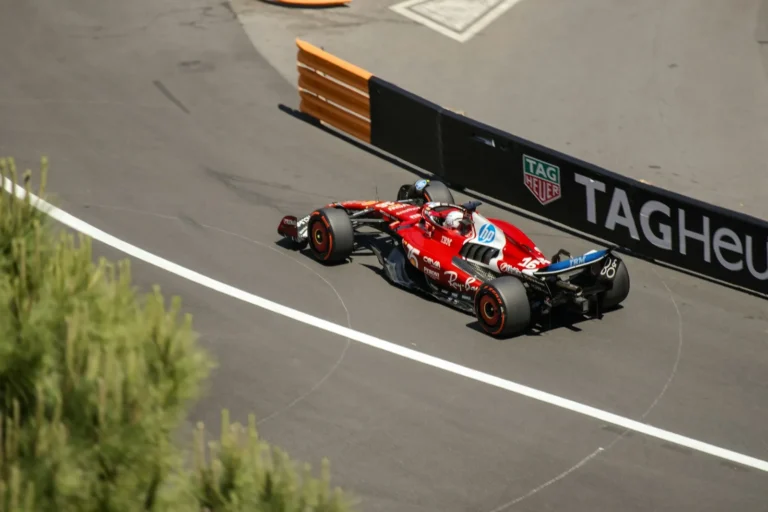
Ferrari spotted it first. In China in March, both Charles Leclerc and Lewis Hamilton ran small winglets on the front of their halos in the sprint. Before qualifying for the main race they were gone: Ferrari had been talking to the FIA, and a senior source at the team described the parts as “borderline”. The funny part? The first version was see-through. Transparent material is allowed for a windscreen, with strict size limits – so Ferrari basically tried to sneak a pair of wings onto the car disguised as a windscreen. It’s not even the first time: back in 2018, Ferrari’s halo-mirror winglets had to come off after Barcelona too. Some teams just can’t leave a halo alone.
The parts came back later in the season in black, in an approved material, and the FIA now considers them legal. That little box is reportedly set to be closed for 2027.
6. The exhaust wing (FTM)
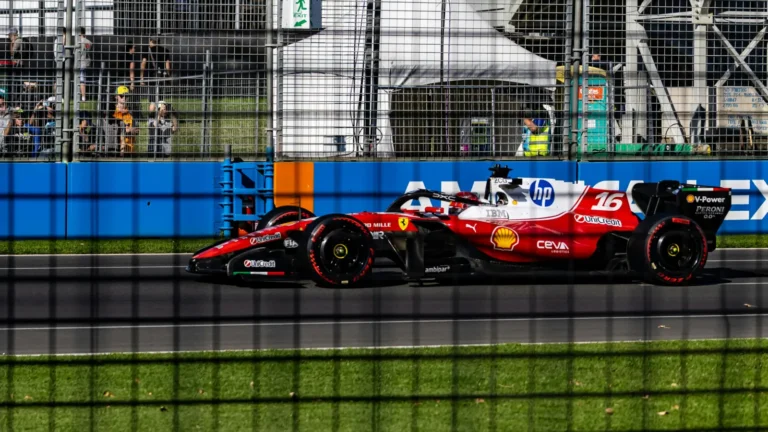
Also Ferrari, and this one made everybody in Bahrain testing stop and stare. On top of the SF-26’s exhaust sat a small, curved winglet, known inside the team as FTM. It turns the hot exhaust flow towards the underside of the rear wing’s lower element and helps pull air out of the middle of the diffuser. More energy in that airflow, more rear downforce.
Exhaust-blown aero was the big trick of the early 2010s, and the rules have tried to keep exhausts away from aerodynamics ever since. So how did Ferrari get away with it? The rules allowed a small device in that area as long as it stayed within 60 millimetres of the rear axle line. Ferrari moved the rear differential as far back as it could go, which pushed the whole area backwards and gave the winglet the space it needed. That’s why nobody could just copy it – you’d have to redesign the back of your car around it. The FIA cleared it in February and it stayed legal all season, but the 2027 regulations block any aerodynamic bodywork around the tailpipe. One season, one team, then it’s gone.
5. Mercedes’ spiky diffuser
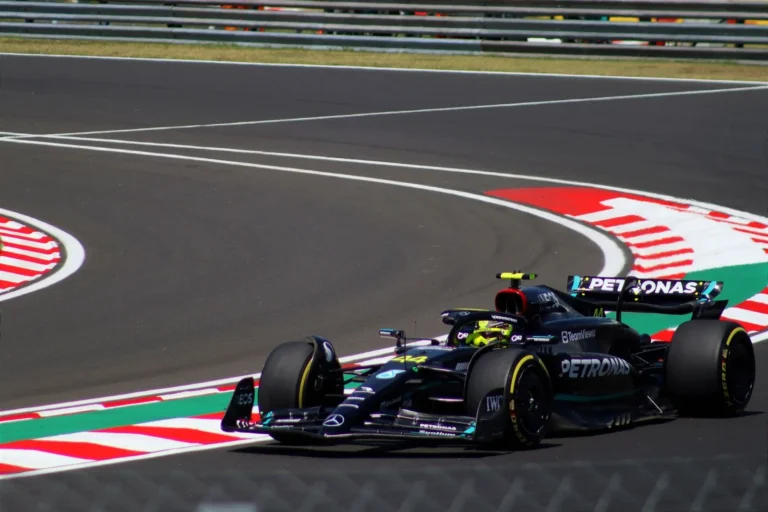
This is where Mercedes and Ferrari really started fighting – over a few tiny teeth. At the Canadian race in May, Mercedes brought its first big upgrade, and the top edge of the diffuser suddenly had a serrated profile across more than half of its width, effectively making the diffuser longer. Mercedes built the teeth into a legal shape using the floor stays, the small supports that stop the floor from bending, plus a few other passages in the rules. The FIA inspected the design before Canada and said it was fine.
Ferrari was furious, and you can see why: at the start of the year its own idea to extend the diffuser had been rejected as more extreme. Racing Bulls and Haas were soon running their own versions, other teams started asking questions – Red Bull later confirmed it was one of them – and Ferrari argued that spiky edges elsewhere on the floor could lead to punctures in close racing. That argument worked. After Barcelona the FIA issued a new document, and Mercedes and Racing Bulls had to change their diffusers before Austria, with the spikes cut right down. Bradley Lord called it “small beer”. But in a season where Mercedes was winning almost everything, Ferrari was never going to let small beer slide.
4. The “Macarena” rear wing
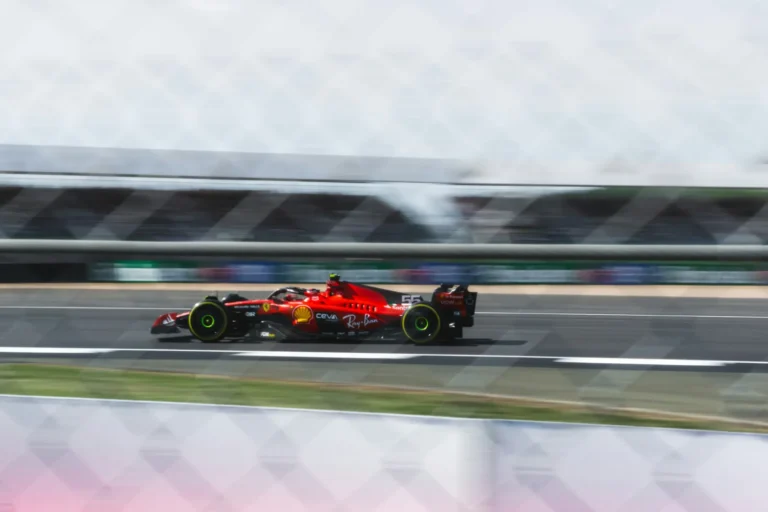
The one everybody’s been talking about all year, with the best name in the paddock. Thursday, 19 February, Bahrain testing: Lewis Hamilton heads down the straight, the active aero opens, and the upper part of the Ferrari’s rear wing doesn’t just flatten like everyone else’s. It keeps rotating until it’s upside down, then flips straight back under braking. Fred Vasseur joked it should be called the Macarena because of the way it dances, and the name stuck.
Ferrari’s flap rotates around 270 degrees. Upside down, the wing stops producing downforce and may even produce a little lift – less drag, more top speed, and less of your precious battery used on the straight. Why is it legal? The rules describe straight mode as a decrease in the flap angle but never say how far it can go. The only real requirements: the switch must take no longer than 400 milliseconds and be the same every time.
It wasn’t an instant hit – Ferrari took it off after practice in China. But in Miami in May, Vasseur said: “From today we will keep the Macarena on the car.” Red Bull turned up with its own version that same weekend, and McLaren was racing one by Monza. Red Bull and McLaren pivot the flap forwards with one central actuator, Ferrari pivots it backwards with the actuators hidden in the endplates. Not banned – but for 2027 the switch time is reportedly dropping to 300 milliseconds, and Ferrari’s wing travels furthest.
3. The emergency shutdown trick
The last three are all about the battery, because in 2026 the battery is where the lap time is. The rules say that when the battery is about to run out, the power has to come down gradually – 50 kilowatts every second – so cars don’t suddenly slow in traffic. But there was an exception: if the motor had to be shut down for a technical reason, like an emergency, the ramp down didn’t apply. Teams using Mercedes and Red Bull engines realised they could trigger that on purpose just before the line and keep full power to the timing beam – reportedly 50 to 100 kilowatts over a short distance. Only hundredths, but in qualifying hundredths are everything.
The catch: after a shutdown, the motor is locked out for 60 seconds. At Suzuka that went wrong. In practice, Kimi Antonelli and Max Verstappen were both left without power through the Esses, and Alex Albon’s Williams stopped on track. Antonelli called himself “a sitting duck at the chicane and the esses”. Ferrari, which had looked at the trick itself, raised safety concerns, and in April the FIA made clear that emergency mode is for emergencies only. End of story. Or so everyone thought.
2. The beep at Silverstone
Mercedes brought the trick back from the dead – completely legally. In qualifying at Silverstone in July, Antonelli and George Russell lifted off the throttle a few metres before the finish line on their fastest laps. Lift and coast in qualifying is nothing new this year – but right before the line, on the lap that counts? Nobody does that.
Another line in the rules: a driver doesn’t have to follow the ramp down if he lifts before the battery hits zero. So the car runs the full 350 kilowatts out of the last corner, the driver lifts just before the battery is empty, and the power drops instantly. No emergency mode, no lockout, no sitting duck. The hard part is timing, so Mercedes built a system that plays a warning tone in the drivers’ earpieces at a preset battery level. Miss it and let the battery run empty, and that’s a ramp-down breach – disqualification from qualifying. That’s a lot of pressure to put on one beep. GPblog’s telemetry analysis had the Mercedes around nine to thirteen km/h quicker than the Ferrari at that point. McLaren said it was surprised; Ferrari started trialling it.
1. The Mercedes compression ratio
Back to the opening question. For 2026 the compression ratio limit was cut from 18:1 to 16:1 – but it was still measured at ambient temperature, with the engine cold in the garage. And metal expands when it gets hot. In December, reports emerged that rivals believed Mercedes, and to a lesser extent Red Bull, had found a way to pass the test cold and run a higher ratio hot on track. Some claimed it got close to the old 18:1. That was never confirmed, and neither was any lap-time gain.
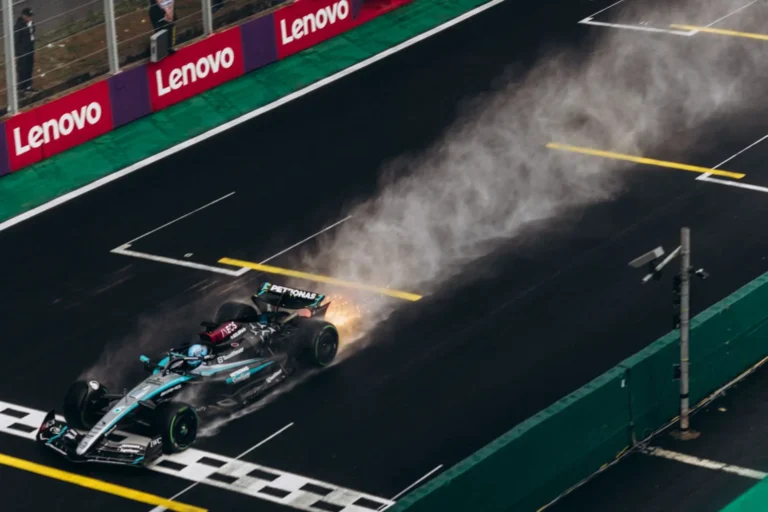
Ferrari, Audi and Honda pushed the FIA to act. There were meetings and secret letters, Mercedes and its customers stood alone, and Toto Wolff complained about rivals “snitching to the head of security”. Mercedes always insisted the engine was legal, and the FIA never said otherwise. In February, the World Motor Sport Council approved a compromise by unanimous e-vote: from 1 June, the ratio would be checked both cold and at 130 degrees Celsius, and from 2027 only hot.
The first race under the new test was Monaco. Mercedes arrived having won every race of the season – and Antonelli took pole and won again, his fifth win in a row. In November, in Mexico, he wrapped up the title. So did the trick make Mercedes, or did Mercedes just build the best car? Nothing was ever proven, the engine passed every check, and the team kept winning after the test changed. That’s the part rivals still don’t love to talk about.
The pattern behind all seven
Look at the seven together and most of them weren’t banned on the spot. The FIA tightened a test, closed a box or rewrote a sentence for next year – and a lot of that is already in the 2027 rules:
- The Macarena reportedly gets less time to flip.
- The exhaust wing is gone.
- The halo gap is set to be closed.
- The compression test goes hot only.
And if you ask me, that’s the real story of 2026. Ferrari came up with three of the seven and still spent the year chasing Mercedes – and that wasn’t even the only fight in red this season, as Leclerc vs Hamilton in Mexico showed. Every one of those rule changes exists because somebody read the rules more carefully than the people who wrote them. On paper, almost none of these loopholes broke a single rule.
So which one do you think went too far – and which one deserves a statue at the factory? More rulebook rows and stewards’ calls are in our FIA & Controversies section.