The George Russell Dilemma: Did Mercedes Fail Him in F1 2026?
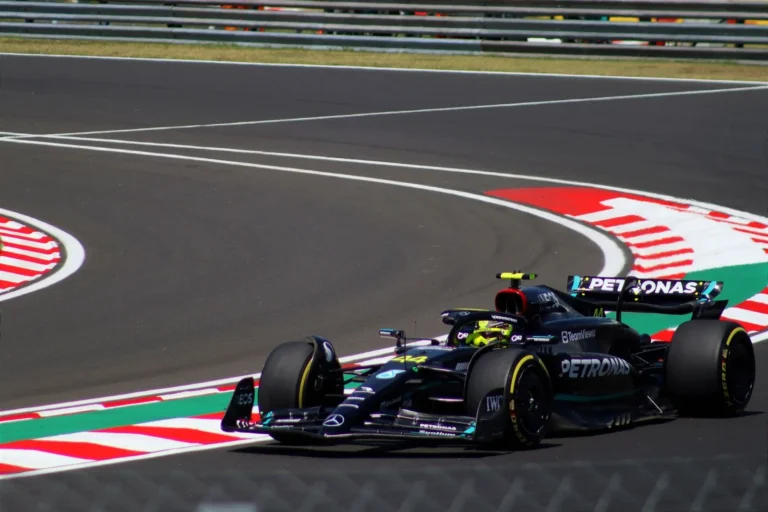
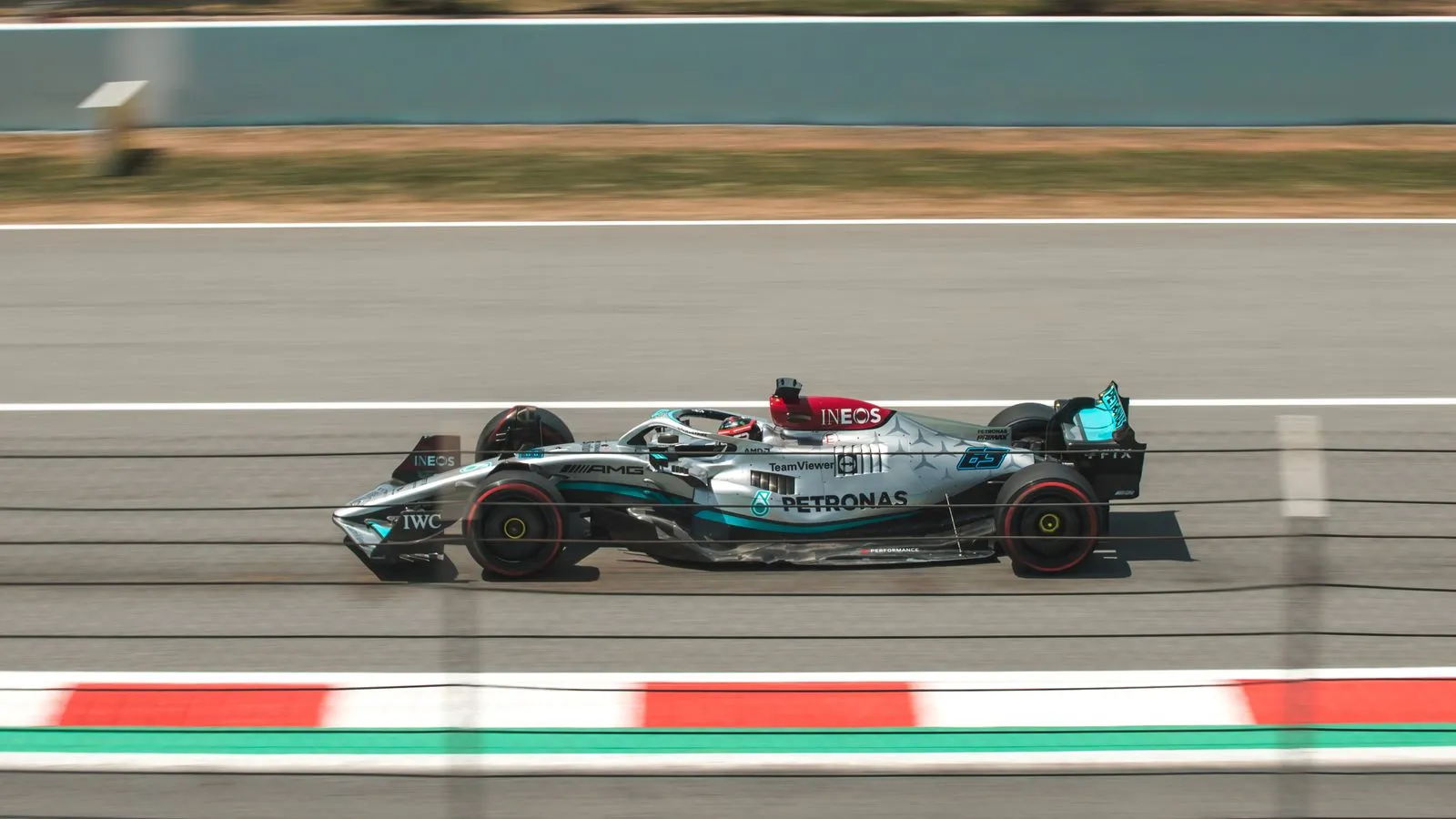
This was supposed to be George Russell’s year. He waited years to become Mercedes’ number one. He became it. He finally got the fastest car on the grid. And then his twenty-year-old team-mate became world champion in that car. At Interlagos, all of that came out over the team radio: George had the pace for pole in the rain, his own team told him to back off, and when Toto Wolff came on to tell him he was P2, he was not in the mood to be comforted.
So: did Mercedes fail George Russell – and did that cost him a fair shot at the title?
The long wait
Russell joined the Mercedes junior programme in 2017, won GP3 as a rookie that year and Formula 2 as a rookie in 2018, beating Lando Norris. Then Mercedes sent him to Williams, the slowest car on the grid. He outqualified Robert Kubica at all 21 races of his first season and still scored zero points.
At Sakhir 2020, standing in for a Covid-hit Lewis Hamilton, he led most of his first race for Mercedes – until the crew fitted Valtteri Bottas’s front tyres to his car, and a later puncture dropped him to ninth. Looking back, that night feels like a trailer for 2026: fast enough to win, and the team somehow found a way for him not to.
He finally got the seat in 2022 – next to a seven-time champion, in a car nowhere near a title. He still outscored Lewis that year and won his first Grand Prix at Interlagos. Wins in Austria and Las Vegas followed, plus a Spa 2024 win he lost because his car was underweight. In 2025, with Hamilton gone, he was team leader next to an 18-year-old Kimi Antonelli, won in Canada and Singapore and finished fourth with 319 points.
2026: It starts perfectly
The new rules arrived, the W17 looked like the class of the field (rivals had their own theories about why – see the smartest F1 loopholes of 2026), and in Melbourne George took pole by more than three quarters of a second over the best non-Mercedes and won, with Antonelli second. After China he was leading the championship.
Then Japan. George was leading when Mercedes pitted him – and one lap later the safety car came out. Antonelli got a cheap stop, won, took the championship lead and never gave it back. That’s not Kimi’s fault; he drove the race he was given, brilliantly. But it was the first time a pit wall decision cost George. Not the last.
The list
- Canada: sprint win, pole, leading on lap 30 – then the car lost power. He threw his headrest out of the car (a suspended fine and an apology to the marshals followed). Antonelli won.
- Monaco: a pit lane speeding penalty by 0.1 km/h that he says the team called a software issue, then the mechanics didn’t hold the car for the penalty, turning it into a drive-through. Wolff called it clearly the team’s mistake. 12th.
- Spa: his battery ran empty on the Kemmel straight on lap one, Leclerc and Hamilton went past, and his race ended in the gravel after contact with Lewis.
- Hungary: engine revs climbed beyond what his foot asked for on the grid, the anti-stall kicked in at the start and he dropped to 21st. Mercedes said it was no fault of his own. He fought back to seventh – one of his best drives of the year, and almost nobody talked about it.
- Monza: leading, until a VSC – Mercedes gave Antonelli an extra stop and left George out, and Kimi passed him late to win. George admitted he was surprised the team split the strategies.
- “Malaysia” (officially the Bahrain Grand Prix – here’s how that happened): running third with five laps left when the power unit broke. Wolff apologised directly. The engine penalty followed him to Singapore.
- Mexico City: a deployment problem at the start dropped him straight back. His engineer said this one was on the team. He finished sixth – and Antonelli became champion.
In between came the good: wins in Austria and a Baku grand slam where he said he felt like himself again. And the contract noise: Wolff and Max Verstappen’s meeting in Sardinia the previous summer followed George into 2026, until Max extended with Red Bull in August.
On the Thursday in Brazil, George ran the numbers himself: six races with no issues, fourteen with an issue of some sort. He called it atrocious luck – and asked whether it can still be called luck if it happens that often.
Favouritism?
Nobody has shown any evidence that Mercedes treated George worse on purpose, and I’m not claiming that either. But think about it from a business point of view. If George wins, that’s a nice story. If the teenager who replaced Lewis Hamilton becomes the youngest champion ever, that’s a story you can build ten years of marketing around. Teams don’t need to sabotage anyone for that to matter – the small calls can quietly lean towards the story that sells better.
We saw a version of this last year at McLaren, where Oscar Piastri led the championship for 15 of 24 rounds before a split strategy in Hungary, a strategy error in Qatar and the Monza position swap. Lando Norris won the title. I’m not saying McLaren handed it to him – but the end of Oscar’s season was honestly heartbreaking.
And the comparison I promised: in 2016 the Mercedes driver with the failures was Hamilton, and Nico Rosberg won by five points. Rosberg was willing to be hard, even with his own team-mate. George is the opposite – former Red Bull mechanic Calum Nicholas says George would wish the Red Bull crew “have a good day lads, good luck” every single weekend. A gent. More golden retriever than pitbull. And I wonder whether, inside a team like Mercedes, being the nice guy is exactly what costs you.
Interlagos: the season in three days
Before a single lap, a new combustion engine meant a five-place grid penalty. In Q3 he was on a lap that could have been pole when the team backed him off behind Alex Albon – and then the rain came. Second in qualifying became seventh on the grid. George called it a misjudgement from the whole team; Wolff called it a fifty-fifty call and doubted the lap would have been enough anyway.
On Sunday he spun backwards at the pit exit after his switch to slicks, had to turn the car around while three cars went past, and still came back to finish fourth. And on that same day, Mercedes clinched the Constructors’ Championship – the team that let George down so many times this year became champion on a weekend that summed up his season.
Our verdict
Go through the season and pick the weekends where George lost points purely because of George. You’ll find Singapore, where he hit the pit wall in the sprint. You can argue about Spa, and Austin is a weekend even he couldn’t explain. Then you kind of run out. Almost everything else lands on the team’s side of the garage: engines, battery, software, pit wall calls. That doesn’t make it a conspiracy. But in the one year he finally had the car, it’s really hard to call that list anything other than being let down.
Kimi Antonelli has won nine races and earned every one of them – nothing here takes that away. But a fair fight means both drivers get the same chance to lose it on their own. George didn’t get that.
The good news: his contract runs into 2027 and Max is signed with Red Bull until 2030. The bad news: next year he’s racing the world champion in the same garage, in the same car. Martin Brundle thinks this season will make George rather than break him. I hope he’s right – and I hope 2027 is the year George stops being the nice guy inside the team. (He certainly wasn’t the nice guy with Max in Las Vegas – and Max hit back hard: is Verstappen right about George Russell?)
Did Mercedes fail George? Tell us in the comments – and find more in Driver Stories.