Why F1 Won’t Cancel Qatar and Abu Dhabi, Even After Yamaha Said No
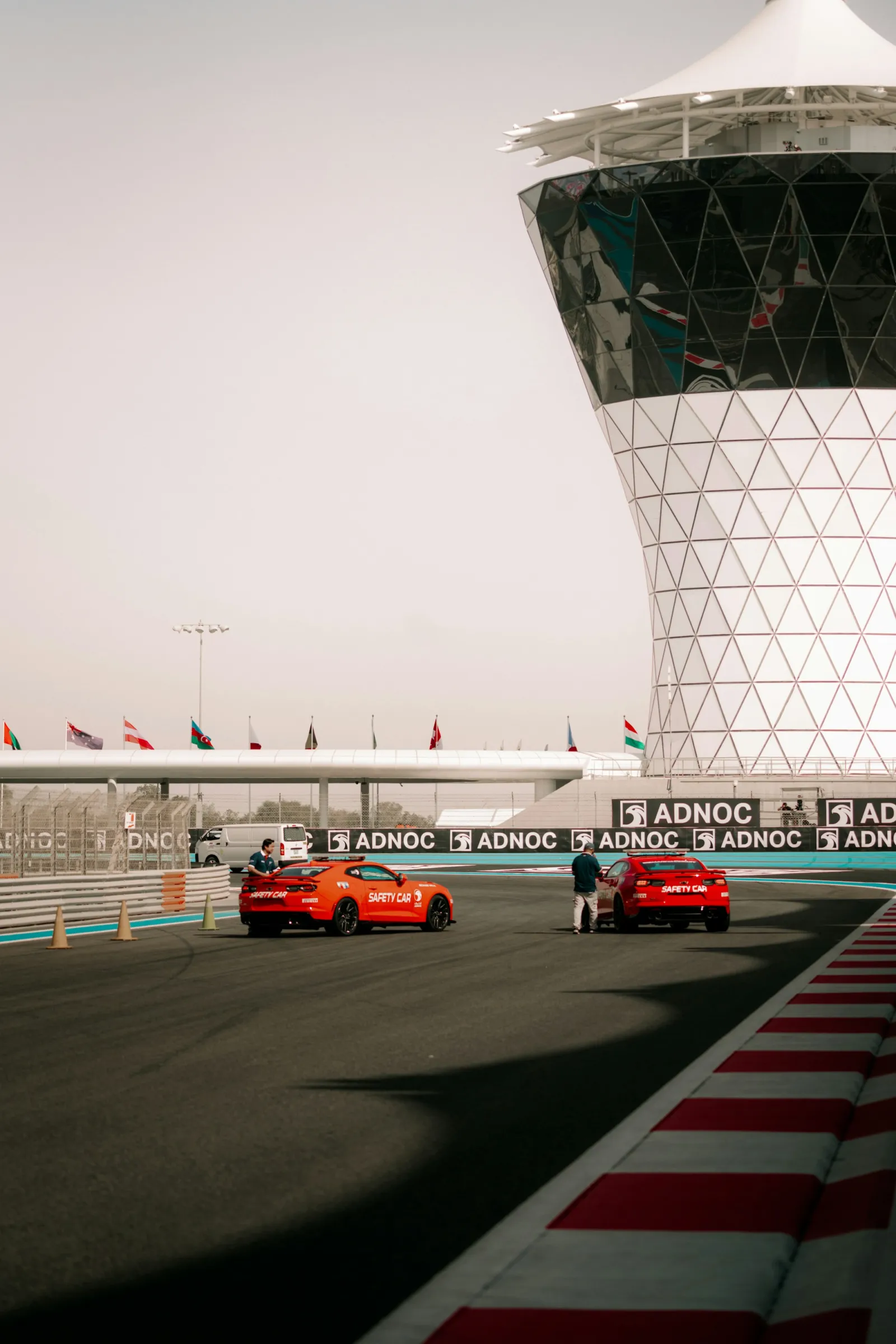
In September, in the same paddock and the same week, Max Verstappen and Lewis Hamilton gave completely opposite answers about the same two races. Max said that with a war nearby, “I think we shouldn’t go.” Lewis said he personally wants to go and loves going to the Middle East. Two months later, a manufacturer looked at the exact same circuit in Qatar and said no: Yamaha kept every one of its MotoGP bikes at home. The awkward part? MotoGP and Formula One are owned by the same company, Liberty Media. And yet all eleven F1 teams are heading to Lusail and Yas Marina for the finale, with the Imola backup gone and no plan B left.
The morning it all started
On 28 February 2026, the United States and Israel launched strikes on Iran, and Iran hit back across the Gulf – including in Bahrain, home to the headquarters of the US Navy’s Fifth Fleet. That same day Pirelli was supposed to start a wet tyre test at Sakhir. It was cancelled as the first Iranian missiles were reported over the country, and Pirelli had to confirm its staff in Manama were safe.
Formula One then said very little for two weeks. The season started in Melbourne, moved on to China, and Bahrain (12 April) and Jeddah a week later were next on the freight plan. During the Chinese Grand Prix weekend, F1 and the FIA announced that neither race would happen in April. Stefano Domenicali called it difficult, but “unfortunately the right one at this stage”. Nobody argued. The calendar dropped from 24 to 22 races, and the teams got almost five weeks off between Suzuka and Miami.
Follow the money
According to analysts at Guggenheim Partners, Bahrain and Saudi Arabia together pay around $115 million a year just to host their races – roughly 14% of all hosting fees on the calendar. The same analysts estimated – F1 never publishes the fees – that losing both could cost the sport somewhere between $190 and $200 million in revenue. Keep that number in mind, because it explains a lot of what happened next.
The Bahrain Grand Prix… in Malaysia
At the end of July, F1 announced the most bizarre race of the year: the Formula One Gulf Air Bahrain Grand Prix, held at Sepang on 4 October, agreed between F1, the FIA and the governments of Bahrain and Malaysia. A country kept its race, its title sponsor and its name on the calendar without a single car turning a wheel inside its borders. Sepang hadn’t hosted F1 since 2017. It was also the weekend James Vowles first called the cost cap a trap – which aged interestingly once Williams became the only team to breach the 2025 cost cap.
And the race was chaos in the best way:
- Rain pushed the start back twice.
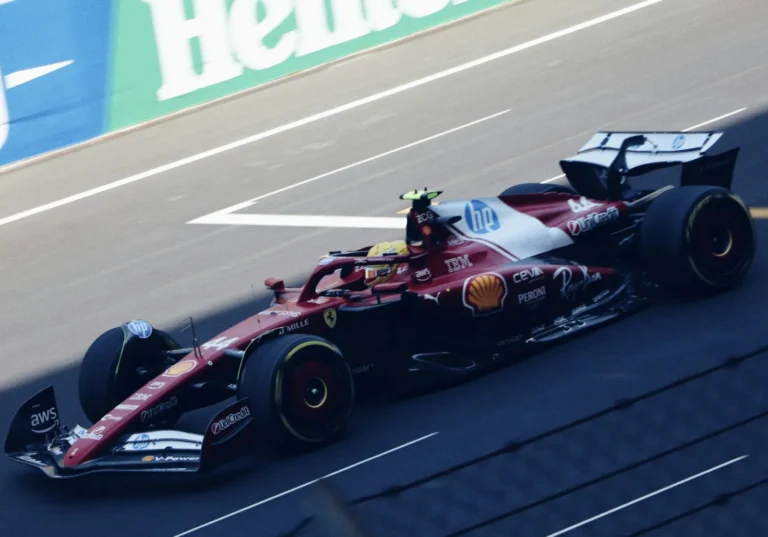
- Verstappen started on pole, Hamilton next to him – then a Ferrari tyre gamble dropped Lewis to 18th, and he fought all the way back to the podium.
- George Russell retired from third with a suspected power unit failure, pushing Kimi Antonelli’s lead out to 84 points.
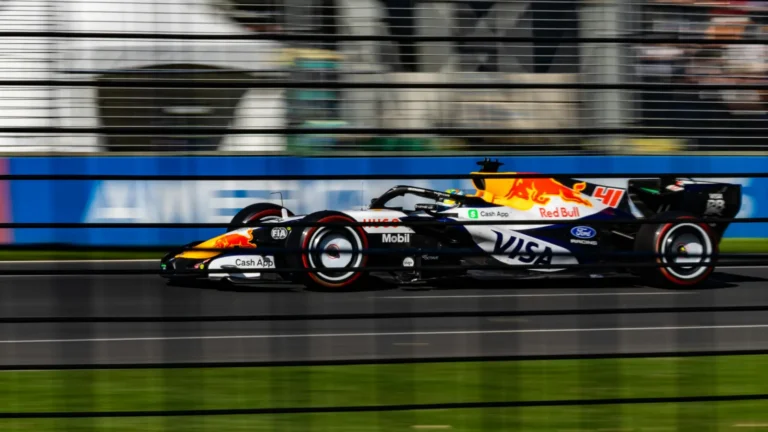
- Max won it: his first win of the season and Red Bull’s first with their own power unit.
- By the chequered flag, almost three and a half hours had passed since the scheduled start.
Saudi Arabia didn’t get that treatment. Jeddah disappeared from 2026 completely and is only expected back next year. Which left the big question: what about the two Middle East races still on the calendar?
Max vs Lewis, and a map
All summer, F1’s answer was the same: as of today, Qatar and Abu Dhabi are confirmed. Behind the scenes, Imola was on standby for a European finale – which would have been the first season to end in Europe since 1984 – with a decision deadline in mid-October.
Then the drivers started talking in Baku, of all places – Azerbaijan shares a border with Iran. Verstappen told Viaplay that he’d normally be happy to go, but with a war nearby, he didn’t think they should. Hamilton went the other way: he wanted to go, admitted he didn’t have all the information, and trusted Stefano to make the call. A couple of weeks later he added that no one seemed to mention F1 had just raced in Azerbaijan, right next to Iran.
On the map, he has a point. Baku is roughly 350 miles from Tehran, Doha about 700 and Abu Dhabi about 800. But distance isn’t the whole story. The attacks that made headlines this year were aimed at American bases across the Gulf, including in Bahrain and Qatar, and the British Foreign Office warned of “a risk of more attacks and unforeseen escalation” in the Gulf, with less severe advice for Azerbaijan. Baku is closer to Iran; the Gulf is where the strikes actually landed. Which matters more depends on who you ask.
The mid-October deadline passed without an announcement. Asked whether Qatar and the Emirates were safe, FIA president Mohammed Ben Sulayem was surprisingly honest: “I cannot predict this.” And by then even Max had softened – he loves going there, he said, but “under the right terms”.
What Yamaha did
MotoGP hit the exact same problem a few weeks earlier. Its Qatar race had been pushed from April to 6–8 November, at Lusail – the very circuit F1 is heading to. According to reports, the riders held a secret meeting at Phillip Island and the majority voted against racing in Qatar. A last attempt to get the race called off failed.
So Yamaha made the call itself. On 1 November, right after the Malaysian MotoGP race at Sepang, Yamaha said it had “not identified sufficient grounds” to change its company-wide travel restrictions. All four bikes – factory team and Pramac – stayed home, with Japan advising against non-essential travel to the region.
MotoGP was furious and said the decision “carries sporting implications.” Then FIM president Jorge Viegas called that press release incorrect: “we don’t have any sanctions from the FIM.” In the end Yamaha pays a financial penalty under its commercial contract with Dorna – no points lost, no ban. The race went ahead with 16 of 22 full-time riders plus two injury replacements, and passed without any major incident. That’s the argument F1 will lean on.
Toto Wolff’s take at Interlagos: riders who “geopolitically know nothing” about the situation but have an audience create media value. The riders’ side was simpler – most of them didn’t want to go, and they were the ones being asked to get on the plane. In F1, nothing like Yamaha happened. Not one team said no, not one driver refused.
No plan B
On 10 November, F1’s last deadline for Imola passed and the season stayed as planned: Las Vegas, Qatar, Abu Dhabi. Ben Sulayem posted: “We are ready for Qatar and Abu Dhabi. See you on the grid.” Fred Vasseur: “Me, personally, I want to race.” F1 said it couldn’t guarantee nothing would change by early December, and that safety would come first if it did.
Five days later, on 15 November, Bahrain’s Interior Ministry sent emergency alerts. The Bahrain Defence Force said it had intercepted Iranian attacks, and Iran’s Revolutionary Guard claimed six drones were sent at an American air defence radar at Riffa Air Base. To be fair, there’s no evidence any of this was aimed at Qatar or the circuit, and the claimed damage hasn’t been confirmed. But Riffa is roughly 110 km from Lusail in a straight line.
In Las Vegas the tone had changed. Max: “I don’t have all the intel. I’m not an officer.” George Russell, a director of the drivers’ association, said the decision sits with “the people in the high powers of politics.” Charles Leclerc called it “kind of tricky” but said he’d trust the process. And Lando Norris is going to Bahrain anyway next week – for a friend’s wedding. His worry: “It’s not about me. It’s a lot more people.”
Two ways to read it
F1’s case: it listened to security advisers all year, cancelled Bahrain and Saudi Arabia when the missiles were flying, brought one of them back, kept Imola on standby until 10 November, and has said safety comes first if things change. MotoGP raced at Lusail without a major incident.
The other case: it’s about money and about who gets to say no. Qatar and Abu Dhabi together are estimated to pay close to $100 million a year in hosting fees, none of which would have moved to Imola. Yamaha looked at the same circuit and decided the risk wasn’t worth it for its staff. And Human Rights Watch argued in March that races give abusive governments “a dazzling distraction from their human rights records” – a question that has barely come up this year, because everyone is asking about drones instead.
What nobody disagrees on is who decides. Max trusts F1 and the FIA, George trusts F1, Charles trusts the process, Fred trusts them to make the best decision. Every single one has handed the decision upwards. And there’s no title left on the line – Antonelli is already champion and Mercedes wrapped up the constructors’ title in São Paulo. These last two races will only decide whether F1’s season ends where it was always supposed to: in the region a war pushed it out of in March.
So: the right call, or should F1 have done what Yamaha did? Tell us in the comments – and find more stories like this in FIA & Controversies.