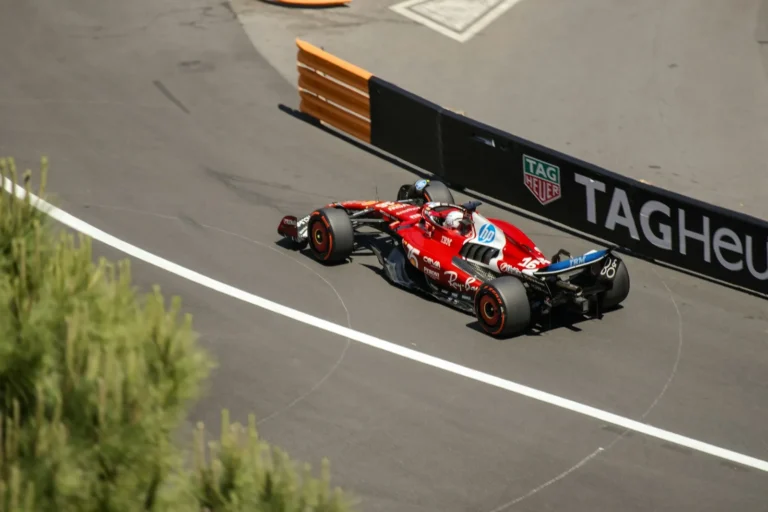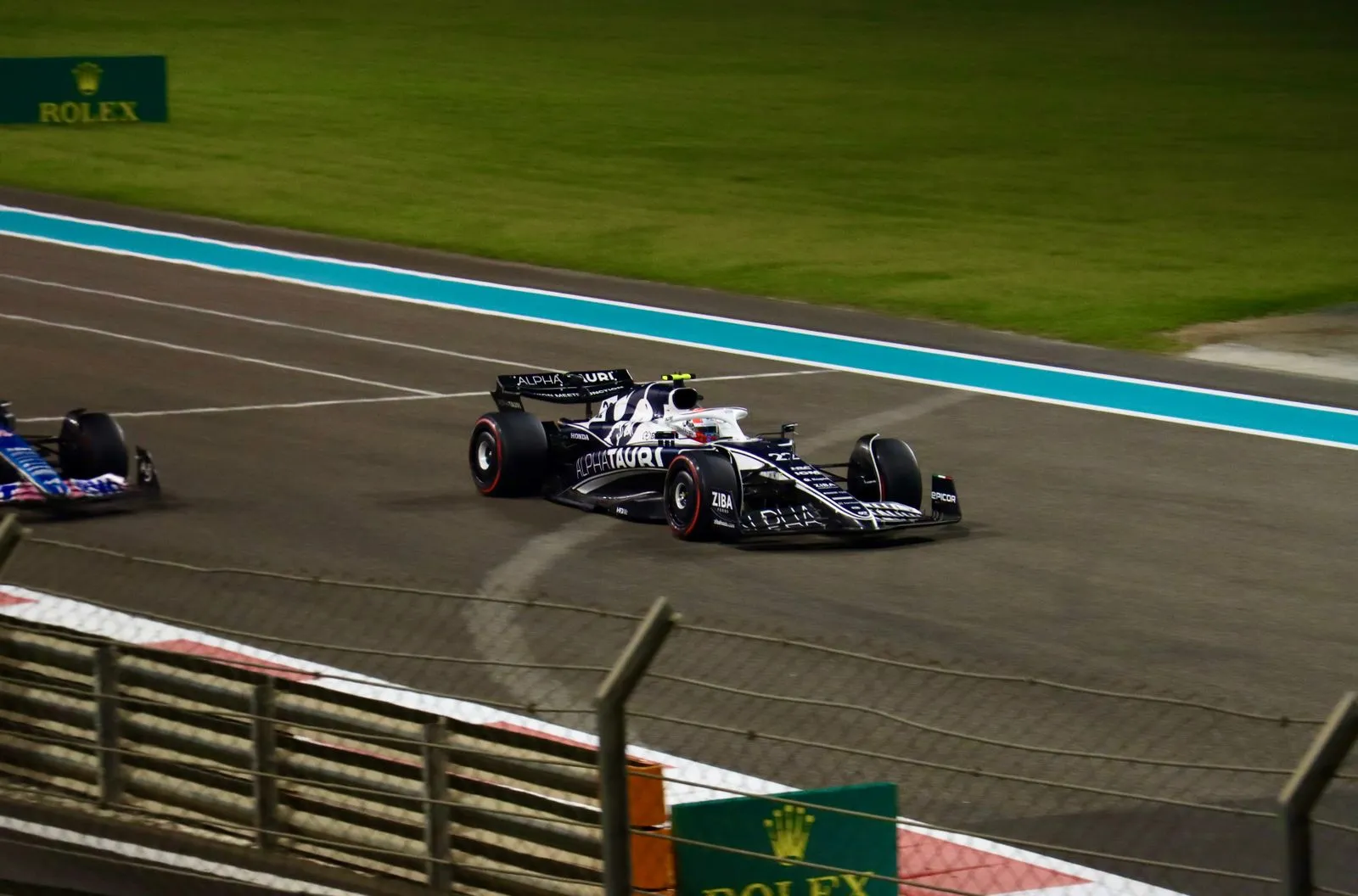
Five Penalties Before Lights Out: Did the Stewards Get the F1 Mexico GP Right?
Before a single car left the grid at the 2026 Mexico City Grand Prix, the stewards had already handed out five penalties. One driver walked away with three of them. Another got a fifty-place grid penalty and still lined up higher than he qualified. And one of the rulings has no real precedent, at least according to a public database of steward decisions going back to 2020.
All of that on a weekend where Lewis Hamilton took his first Grand Prix pole for Ferrari – the 105th of his career, before a lap-one clash with Charles Leclerc – and Kimi Antonelli became the youngest world champion in F1 history. Let’s go through it one decision at a time, and at the end you get my honest scorecard.
Penalties 1 and 2: Verstappen vs Lawson in practice
It started on Friday in second practice, in the stadium section of the Autódromo Hermanos Rodríguez, where the track runs through the old baseball stadium once known as Foro Sol. Max Verstappen was on a preparation lap. Liam Lawson was on a cool-down lap, getting ready for another push. Neither of them was on a fast lap – which is why what happened next looked so odd.
From the entry of turn 12 to the apex of turn 14, the two went back and forth in a series of moves you’d expect on lap one of a race, not on a slow lap in practice. They touched, and Verstappen had to drive the rest of the session with bargeboard damage. Afterwards he told Motorsport.com it was “just not very smart behavior” from Lawson to pick a fight with him – a pointed thing to say about a driver from Red Bull’s own sister team.
The decision took hours. When it came, it was a one-place grid penalty for each driver plus one penalty point on their super licences, which took Verstappen to one point over the last twelve months and Lawson to four. The stewards called the behavior unacceptable and said both drivers admitted the moves were unnecessary and clumsy. They also explained why they went further than a warning: a warning had been given at the team managers’ meeting earlier that day, there had been similar incidents in practice this year, and the outcome was, in their words, consistent with practice contact incidents in previous years.
Is that ruling actually consistent?
That last claim can be checked. Analyst Jessica Steele went through the dataset behind f1penalties.com – 1,520 steward decisions across 150 race weekends, from the start of 2020 up to Mexico.
- Before Mexico, there had been 20 practice decisions this season about how a driver behaved towards another car.
- 11 ended in a warning, 2 in a reprimand and 7 with no further action.
- None produced a sporting penalty.
One round earlier in Austin, George Russell was investigated for forcing Charles Leclerc off the track in second practice, with both cars on preparation laps – no further action. In Steele’s data, Mexico is also the only practice incident since 2020 where both drivers were penalized. The closest precedents, Sergio Pérez at the 2020 Tuscan GP and Lance Stroll at Monaco in 2025, got the same one place and one point – but each time one driver hit another and one driver was punished.
To be fair to the stewards: Steele is upfront that she built her comparison groups after the fact, and stack enough conditions and almost anything looks unique. The big unknown is that team managers’ warning. Sky Sports reported it was about overtaking in the final sector, but the decision documents don’t say what the teams were told.
Here’s where I land. I think the penalty itself is small and probably fair – two experienced drivers had a scrap on a slow lap hours after a warning. What bothers me is the reasoning. If the line moved on Friday morning, tell everyone where it is now. Fans can’t check a warning nobody has published.
Penalty 3: Bottas and the fifty-place grid drop
The biggest number of the weekend mattered the least. Cadillac fitted Valtteri Bottas’s car with a new combustion engine, turbocharger, energy store, control electronics and MGU-K. The first time a driver goes over the season allocation for an element, it costs ten places – per element. Five first-time breaches makes fifty.
But the rules put a ceiling on it: anyone with more than fifteen places of penalties simply starts at the back. Bottas had already qualified slowest of all 22 cars, so he moved nowhere – in the end he lined up 21st, one spot higher than he qualified. His race ended early when a suspension failure sent him into the barrier at turn one and brought out the red flag. He was checked at the medical centre and released. Nothing to judge here; the stewards just applied the formula.
Penalty 4: Lawson disqualified from qualifying
Lawson qualified a strong eighth for Racing Bulls. Then the stewards looked at what his car did straight after his fastest lap in Q2. Under this year’s power unit rules, MGU-K deployment has to step down in a regulated way once the car crosses the line. According to the stewards, Lawson didn’t lift straight away, so the step-down wasn’t achieved.
Racing Bulls said there was no performance advantage and had reported the breach themselves. It didn’t matter: the stewards wrote that non-compliance “is not excused if no performance advantage is gained” and pointed to a multitude of precedents. Harsh – especially with the team reporting itself – but also the most consistent ruling of the weekend.
Penalty 5: A pit lane start that swallowed everything
With Lawson heading to the back anyway, Racing Bulls changed the suspension set-up under parc fermé without approval, which alone means a pit lane start. According to the FIA technical delegate, the team also uncovered the car early on race morning and fitted a fifth engine, a fifth turbocharger, a fifth exhaust and a seventh power unit ancillary part – all beyond the season limit. On paper that’s another forty grid places. According to GPblog, all of it was absorbed by the pit lane start, and so was Friday’s one-place penalty.
That’s the detail I can’t get past. Friday’s penalty hit two drivers, but the only one whose starting spot actually changed was Verstappen, who dropped from fourth to fifth. The driver who moved up into fourth? Championship leader Kimi Antonelli, on the weekend he could clinch the title.
In the end it barely mattered. Verstappen won from fifth, ahead of Hamilton, and Antonelli finished third – enough to become world champion. Lawson came through from the pit lane to finish ninth – and still has no seat confirmed for 2027 (more on Red Bull’s problem with Liam Lawson). (How a teenager got to that point is a story of its own – here’s the full Antonelli story.)
The grid change that had nothing to do with the stewards
On Saturday morning, Haas took Esteban Ocon out of the car for the rest of the weekend and put reserve driver Ryo Hirakawa in. The team gave no reason, and team boss Ayao Komatsu told Sky Sports only that Ocon wasn’t ill. On the record: on Friday Ocon pushed back on the radio when Haas switched his FP2 run from softs to mediums, and in September Haas had already announced he won’t be with the team next year.
The French newspaper L’Équipe reported an altercation between Ocon and Komatsu and suggested it may have turned physical, which Ocon flatly denied in a statement on Saturday evening. He said a difference in viewpoints had led to a discussion the night before, categorically rejected any suggestion of physical violence and asked people to stop speculating. Haas hasn’t publicly confirmed any of it. According to GPblog, the FIA approved the swap, and the Le Mans winner lined up 18th on his race debut weekend.
My scorecard: did the stewards get Mexico right?
Three of the five weren’t really judgment calls at all. Bottas, the disqualification and the pit lane start came straight out of the rulebook, and on those the stewards were right, even where it felt harsh. The two Friday penalties were genuine judgment calls – and there I think the size was right and the explanation wasn’t. A ruling that breaks with twenty earlier cases this season deserves more than a nod to a private meeting.
If the FIA wants drivers to behave in practice, the fix is simple: write the new standard down and put it in the decision, so nobody has to guess where the line is next time.
Who do you think started it on that lap? Tell us in the comments – and find more stewarding rows in FIA & Controversies and more weekend breakdowns in Race Weekends.